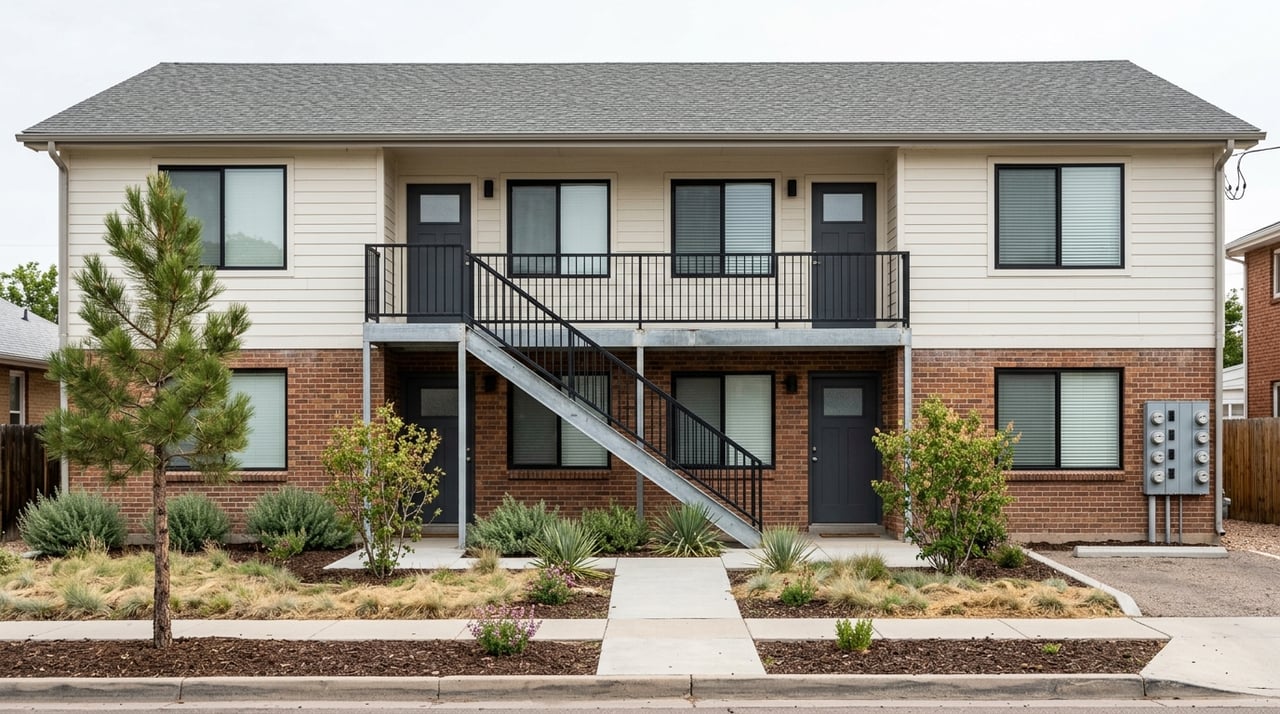
If you are looking for a small multifamily investment in Fort Collins, the area near Colorado State University deserves a hard look. Demand is not driven by one trend alone. You are looking at a city with a large rental base, record CSU enrollment, limited infill land near campus, and a local policy environment that supports housing while expecting owners to stay compliant. That mix can create real opportunity, but only if you underwrite carefully. Let’s dig in.
Why CSU proximity matters
Fort Collins is a meaningful rental market by any practical measure. The city’s 2024 population estimate was 170,924, median gross rent was $1,690, and the owner-occupied housing rate was 51.6%. At the same time, housing affordability remains a major concern locally, with only about 1 in 10 residents rating the availability of affordable quality housing positively in the city’s community survey.
CSU adds a strong demand engine on top of those broader market fundamentals. The Fort Collins campus reached a record total enrollment of 34,412 students in fall 2025, including 5,376 first-year students. For investors, that creates a steady pool of renters and supports the long-term case for well-located small multifamily housing near campus.
The city’s strategic planning also matters here. Fort Collins’ 2026 to 2030 Strategic Plan calls for more housing supply, more housing choice, and safe, healthy rental housing. In plain English, that suggests the city is supportive of housing solutions, but very focused on rules, standards, and fit.
Where small multifamily shows up
Near CSU, small multifamily tends to be an infill story rather than a greenfield story. The Old Town Neighborhoods Plan says there is very little vacant or developable land left around downtown and CSU, yet small and medium multifamily projects still attract interest. Specific areas called out include locations across from CSU along Laurel Street in Westside and along College Avenue in Eastside.
That limited-land dynamic is important when you are evaluating value. In these close-in areas, scarcity can support demand, but it can also make every parcel more sensitive to zoning, access, design constraints, and neighborhood context. A promising address is not enough on its own.
Fort Collins’ Structure Plan reinforces that point. The city supports mixed neighborhoods with attached and detached housing, along with small-scale multifamily, in walkable areas near transit and services. It also says larger multifamily within existing single-family areas should generally be limited to edge or corner parcels that abut arterials or mixed-use districts.
Common property types near CSU
If you are shopping near CSU, you will usually see a few property types come up again and again:
- Older duplexes
- Triplexes
- Fourplexes
- Small apartment buildings
- Older houses with ADU potential
Under Fort Collins’ Land Use Code, a duplex is one building with two units, either side by side or stacked. Apartment buildings are buildings with three or more housing units, typically at least two stories with common entries facing the street.
For very small multifamily, the zoning details can be especially useful. OT-B allows detached house, duplex, triplex, and apartment building types up to four units on a lot. The city’s site-design standards also contemplate apartment buildings with 8 to 12 units per building, which helps frame the upper edge of what many buyers think of as a small apartment asset.
Accessory dwelling units also deserve attention. Fort Collins says ADUs are allowed in all city zone districts, subject to city requirements, and they can be attached or detached. That gives some older homes and duplexes near campus more flexibility as long-term rental properties or future value-add projects.
Rent drivers are hyper-local
One of the biggest mistakes investors make near CSU is using a citywide rent number as if every block performs the same. It does not. In Fort Collins, your rental performance can shift based on campus access, downtown proximity, walkability, transit, daily services, and practical issues like parking and site layout.
The city’s own planning documents support that view. The Structure Plan emphasizes walkability, transit access, and nearby services in mixed neighborhoods, while the Old Town plan highlights proximity to downtown and CSU. For you, that means a property’s micro-location can matter just as much as the unit count.
Vacancy data also supports a balanced approach. CHFA’s fourth-quarter 2025 apartment survey showed Fort Collins Metro vacancy at 5.9%, with Fort Collins North at 6.3% and Fort Collins South at 5.5%. That is not a broken rental market, but it is also not a market where you should assume instant leasing at any price.
Small-area rent benchmarks show the same block-by-block reality. HUD’s FY2025 small-area Fair Market Rent schedule lists two-bedroom benchmark rents at about $1,520 in 80521, $1,570 in 80524, $1,820 in 80525, and $1,610 in 80526. These are program benchmarks rather than direct asking rents, but they are still useful as a conservative reference point when comparing locations inside the same city.
How to underwrite CSU-area deals
The best small multifamily deals near CSU usually make sense because of disciplined underwriting, not because of optimistic assumptions. A property can look attractive on a simple rent sheet and still disappoint once you account for vacancy, turnover, repairs, and compliance costs.
A practical underwriting approach should include:
- A real vacancy or credit-loss reserve
- Turnover costs between tenants
- Repair and maintenance reserves
- Permit and renovation costs
- Parking and access considerations
- Compliance costs tied to rental standards
Because metro vacancy was near 6% in late 2025, it is smart to stress-test your numbers rather than assume perfect occupancy. That is especially true for smaller properties where one vacant unit can materially change your monthly cash flow.
Turn costs matter too. In a campus-influenced rental market, you need to think about how often units may need paint, flooring, appliances, or small repairs. Even if demand stays healthy, your return can erode quickly if your renovation and turnover assumptions are too light.
Compliance is part of the business plan
In Fort Collins, small multifamily investing is not just about buying the right building. It is also about operating it correctly. The city’s rental housing program says most long-term rental properties, defined as homes rented for 30 days or more, must register annually and self-certify that they meet minimum housing standards.
That requirement should be treated as a normal part of ownership, not an afterthought. The city says registration is required by ordinance, fines can be assessed for noncompliance, and tenants can request an inspection if they believe a unit does not meet standards.
The minimum standards cover core livability items like working heat, water, and windows that open. Rental inspections can review exterior, interior, electrical, mechanical, and fire-safety conditions. If you are buying an older duplex, triplex, or fourplex near CSU, deferred maintenance can become more than a repair budget issue. It can become a compliance issue.
Renovation can change the math
Many CSU-area buyers are drawn to older properties because they see upside. Sometimes that upside is real. Sometimes it gets reduced by code requirements, permit costs, or design limitations that were not obvious at first glance.
Fort Collins specifically lists duplex and attached-ADU conversions, as well as new residential additions, among its building-permit categories. The city also warns that adding a second unit can involve significant fees and code upgrades similar to building a new house. That is a major point for value-add buyers.
In other words, the hidden variable is often not the current building. It is what the parcel is actually allowed to become and what it will cost to get there. Before you count on adding units or expanding the property, check the zoning, the approval path, and the likely construction scope.
Parking rules changed the equation
Parking is one of the more important feasibility variables near CSU, especially on smaller lots. Fort Collins now treats different housing types differently. Detached houses, duplexes, 2-unit rowhouses, manufactured homes, and short-term rentals still need on-site parking.
But for multi-unit housing with three or more units, the city no longer requires on-site vehicle parking. ADUs also do not require on-site vehicle parking. For infill investors, that can materially improve what is possible on a tight site near campus.
That does not mean parking stops mattering to tenants. It simply means city code may be less restrictive than many buyers expect. In practice, you still want to evaluate how the property functions day to day for residents and how location affects parking demand.
Old Town context matters
If your target property is in or near Old Town, design and neighborhood context deserve extra attention. The city’s Old Town guidance emphasizes compatible, context-specific design, especially for exterior additions, massing, rooflines, and façade changes.
That matters because not every renovation that works on paper will fit the surrounding context. If you are planning to reposition an older building, add units, or make major exterior changes, you should evaluate the design side as early as the financial side.
This is one reason close-in investing often rewards local knowledge. The opportunity is real, but the path is rarely generic.
What to check before you buy
Before you get too attached to a CSU-area multifamily deal, slow down and verify the basics. Fort Collins recommends checking the parcel’s zone district and any vested rights because some properties or subdivisions already have approved uses that affect what you can do.
You should also avoid relying on outdated assumptions. The city says it has eliminated familial-based occupancy restrictions and related permits and forms. That is a reminder that local rules evolve, and old investor talk is not always current or accurate.
A practical pre-offer checklist includes:
- Confirm the current zone district
- Check whether the parcel has vested rights or prior approvals
- Review the current use against what the code allows now
- Evaluate deferred maintenance against rental standards
- Estimate realistic vacancy and turn costs
- Review parking and access based on the actual property type
- Understand permit implications before planning added units or conversions
Why strategy matters more than hype
Small multifamily investing near CSU can be a smart move, but it is not a shortcut. The strongest deals usually combine several advantages at once: steady demand tied to CSU, a walkable close-in location, limited nearby infill supply, and a parcel that supports your plan under current city rules.
This is exactly where a deal-specific, low-pressure approach helps. You want to look beyond the listing language and ask better questions about use, constraints, upside, and long-term value. In Fort Collins, those details often separate a good property from an expensive lesson.
If you are weighing a duplex, fourplex, ADU opportunity, or small apartment building near campus, working with a broker who understands both the neighborhood and the numbers can save you time and help you avoid avoidable mistakes. When you want grounded guidance on CSU-area rentals, infill potential, and small multifamily strategy, connect with Michael Jensen.
FAQs
What makes small multifamily near CSU attractive in Fort Collins?
- Small multifamily near CSU benefits from record university enrollment, a large city rental market, limited infill land near campus, and strong demand for well-located housing.
What property types count as small multifamily near CSU in Fort Collins?
- In this area, small multifamily usually means duplexes, triplexes, fourplexes, small apartment buildings, and in some cases older properties with ADU potential.
What vacancy rate should Fort Collins investors keep in mind?
- CHFA reported Fort Collins Metro apartment vacancy at 5.9% in the fourth quarter of 2025, which supports using a real vacancy reserve in your underwriting.
What rental compliance rules apply to Fort Collins multifamily properties?
- Most long-term rental properties in Fort Collins must register annually and self-certify that they meet minimum housing standards, and noncompliance can lead to fines.
What should buyers check before adding units to a Fort Collins property?
- You should confirm zoning, vested rights, permit requirements, likely code upgrades, and whether the parcel can realistically support the planned conversion or addition.
Do Fort Collins multifamily properties near CSU need on-site parking?
- It depends on the property type, because detached houses and duplexes still require on-site parking, while multi-unit housing with three or more units and ADUs do not require on-site vehicle parking under current city rules.